Highlights
•Exposure to ethylmercury (EtHG) poses neurotoxic risks in children.
•Behavioral abnormalities were induced by EtHg exposure in neonatal mice.
•Changes in neurite length and BDNF expression were observed.
•EtHg induces physiological changes in the brain by activating microglia.
Excerpt
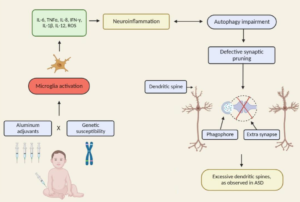
“Our findings revealed that EtHg exposure led to significant alterations in brain development, including increased brain size and cortical thickness. These structural changes were accompanied by notable impairments in social interactions and behavioral patterns. Further analysis indicated that these effects were likely mediated by increased microglial activation and elevated BDNF expression in the cerebral cortex. Overall, our study suggests that EtHg disrupts neurodevelopment by activating microglia, leading to physiological and morphological changes in the brain.
- March 15, 2025