Aluminum / Blood brain barrier / Bradford Hill criteria / Epidemiology / HLA / IL-1β / Lymphocytes / MTHFR / Neuroinflammation / NLRP3 / Toxicants
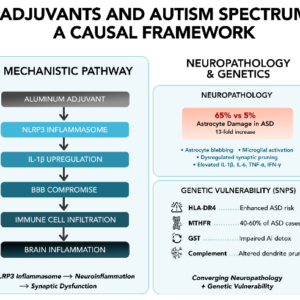
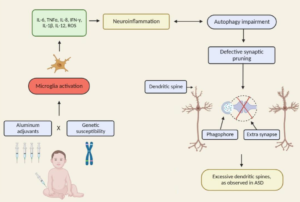
Conclusions: Converging mechanistic, neuropathological, epidemiological, and genetic evidence demonstrates that aluminum adjuvants can trigger ASD in genetically susceptible individuals through well-characterized neuroinflammatory pathways. The 80-fold increase in ASD prevalence temporally correlating with vaccine schedule expansion, combined with robust biological mechanisms and postmortem findings, demands urgent re-examination of aluminum adjuvant safety in the context of neurodevelopment, particularly in genetically vulnerable populations.
- February 2, 2026