Excerpt:
“Depletion of intracellular GSH with buthionine sulfoximine treatment greatly increased the K562 cell growth inhibitory effects of thimerosal, which showed that intracellular glutathione had a major role in protecting cells from thimerosal. “
admin
Exceprts:
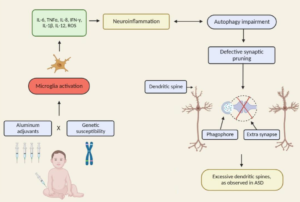
We also discuss evidence implicating oxidative stress, neuroglial activation and neuroimmunity in autism.
“Oxidative stress is another possible cause of Purkinje cell loss and other neuroanatomical changes described in autistic brains (reviewed in (37, 113)). Oxidative stress occurs when the levels of reactive oxygen species exceed the antioxidant capacities of a cell, often leading to cell death. Because of its very high oxygen demands and limited anti-oxidant capacity, the brain is thought to be relatively vulnerable to oxidative stress (111). Several studies have shown decreased levels of antioxidants such as superoxide dismutase, transferrin and ceruloplasmin in the blood or serum of patients with ASD (38, 108, 222). Significant elevations in biomarker profiles indicating increased oxidative stress, such as increased lipid peroxidation, have also been documented in autism (38, 107, 229).Interestingly, in one report the alterations in antioxidant proteins were linked specifically to regressive autism, suggesting a postnatal environmental effect (38). Polymorphisms in metabolic pathway genes may contribute to the increased oxidative stress in autism (108). Advanced glycationend products have also been reported to be elevated in both the brain tissue and serum of autistic patients, a change which can also lead to increased oxidative damage (23,110).”
Abstract
The objective of this study was to estimate the prevalence of autistic spectrum disorder (ASD) and identify its clinical characterization, and medical conditions in a paediatric population in Portugal. A school survey was conducted in elementary schools, targeting 332 808 school-aged children in the mainland and 10 910 in the Azores islands. Referred children were directly assessed using the Diagnostic and Statistical Manual of Mental Disorders (4th edn), the Autism Diagnostic Interview–Revised, and the Childhood Autism Rating Scale. Clinical history and a laboratory investigation was performed. In parallel, a systematic multi-source search of children known to have autism was carried out in a restricted region. The global prevalence of ASD per 10 000 was 9.2 in mainland, and 15.6 in the Azores, with intriguing regional differences. A diversity of associated medical conditions was documented in 20%, with an unexpectedly high rate of mitochondrial respiratory chain disorders.
Abstract
Autistic disorder is a heterogeneous disorder. The majority of the cases are idiopathic, and only a small number of the autistic children have associated secondary diagnosis. This article reports 2 children with mitochondrial disorders associated with autistic disorder fulfilling the diagnostic criteria of the American Psychiatric Association Manual of Psychiatric Diseases, 4th edition, and briefly reviews the literature on autistic disorder associated with mitochondrial disorders.
Excerpt:
“Elevation of cerebrospinal fluid levels of tumor necrosis factor-alpha was significantly higher (mean = 104.10 pg/mL) than concurrent serum levels (mean = 2.78 pg/mL) in all of the patients studied. The ratio of the cerebrospinal fluid levels to serum levels averaged 53.7:1. This ratio is significantly higher than the elevations reported for other pathological states for which cerebrospinal fluid and serum tumor necrosis factor-alpha levels have been simultaneously measured.”
Excerpt:
“There was a significant dose-response relationship between the severity of the regressive ASDs observed and the total mercury dose children received from Thimerosal-containing vaccines/Rho (D)-immune globulin preparations. Based upon differential diagnoses, 8 of 9 patients examined were exposed to significant mercury from Thimerosal-containing biologic/vaccine preparations during their fetal/infant developmental periods, and subsequently, between 12 and 24 mo of age, these previously normally developing children suffered mercury toxic encephalopathies that manifested with clinical symptoms consistent with regressive ASDs. Evidence for mercury intoxication should be considered in the differential diagnosis as contributing to some regressive ASDs.”
Conclusion: Metals are ubiquitous in our environment, and exposure to them is inevitable. However, not all people accumulate toxic levels of metals or exhibit symptoms of metal toxicity, suggesting that genetics play a role in their potential to damage health. Metal toxicity creates multisystem dysfunction, which appears to be mediated primarily through mitochondrial damage from glutathione depletion.
Accurate screening can increase the likelihood that patients with potential metal toxicity are identified. The most accurate screening method for assessing chronic-metals exposure and metals load in the body is a provoked urine test.
Abstract
According to the Autism Society of America, autism is now considered to be an epidemic. The increase in the rate of autism revealed by epidemiological studies and government reports implicates the importance of external or environmental factors that may be changing. This article discusses the evidence for the case that some children with autism may become autistic from neuronal cell death or brain damage sometime after birth as result of insult; and addresses the hypotheses that toxicity and oxidative stress may be a cause of neuronal insult in autism. The article first describes the Purkinje cell loss found in autism, Purkinje cell physiology and vulnerability, and the evidence for postnatal cell loss. Second, the article describes the increased brain volume in autism and how it may be related to the Purkinje cell loss. Third, the evidence for toxicity and oxidative stress is covered and the possible involvement of glutathione is discussed. Finally, the article discusses what may be happening over the course of development and the multiple factors that may interplay and make these children more vulnerable to toxicity, oxidative stress, and neuronal insult.
Excerpt:
“Significant cognitive deficits in water-maze learning were observed in the combined aluminum and squalene group (4.3 errors per trial) compared with the controls (0.2 errors per trial) after 20 wk. Apoptotic neurons were identified in aluminum-injected animals that showed significantly increased activated caspase-3 labeling in lumbar spinal cord (255%) and primary motor cortex (192%) compared with the controls. Aluminum-treated groups also showed significant motor neuron loss (35%) and increased numbers of astrocytes (350%) in the lumbar spinal cord. The findings suggest a possible role for the aluminum adjuvant in some neurological features associated with GWI and possibly an additional role for the combination of adjuvants.”
Excerpt:
“The metabolic results indicated that plasma methionine and the ratio of S-adenosylmethionine (SAM) to S-adenosylhomocysteine (SAH), an indicator of methylation capacity, were significantly decreased in the autistic children relative to age-matched controls. In addition, plasma levels of cysteine, glutathione, and the ratio of reduced to oxidized glutathione, an indication of antioxidant capacity and redox homeostasis, were significantly decreased. Differences in allele frequency and/or significant gene-gene interactions were found for relevant genes encoding the reduced folate carrier (RFC 80G > A), transcobalamin II (TCN2 776G > C), catechol-O-methyltransferase (COMT 472G > A), methylenetetrahydrofolate reductase (MTHFR 677C > T and 1298A > C), and glutathione-S-transferase (GST M1). We propose that an increased vulnerability to oxidative stress (endogenous or environmental) may contribute to the development and clinical manifestations of autism.”